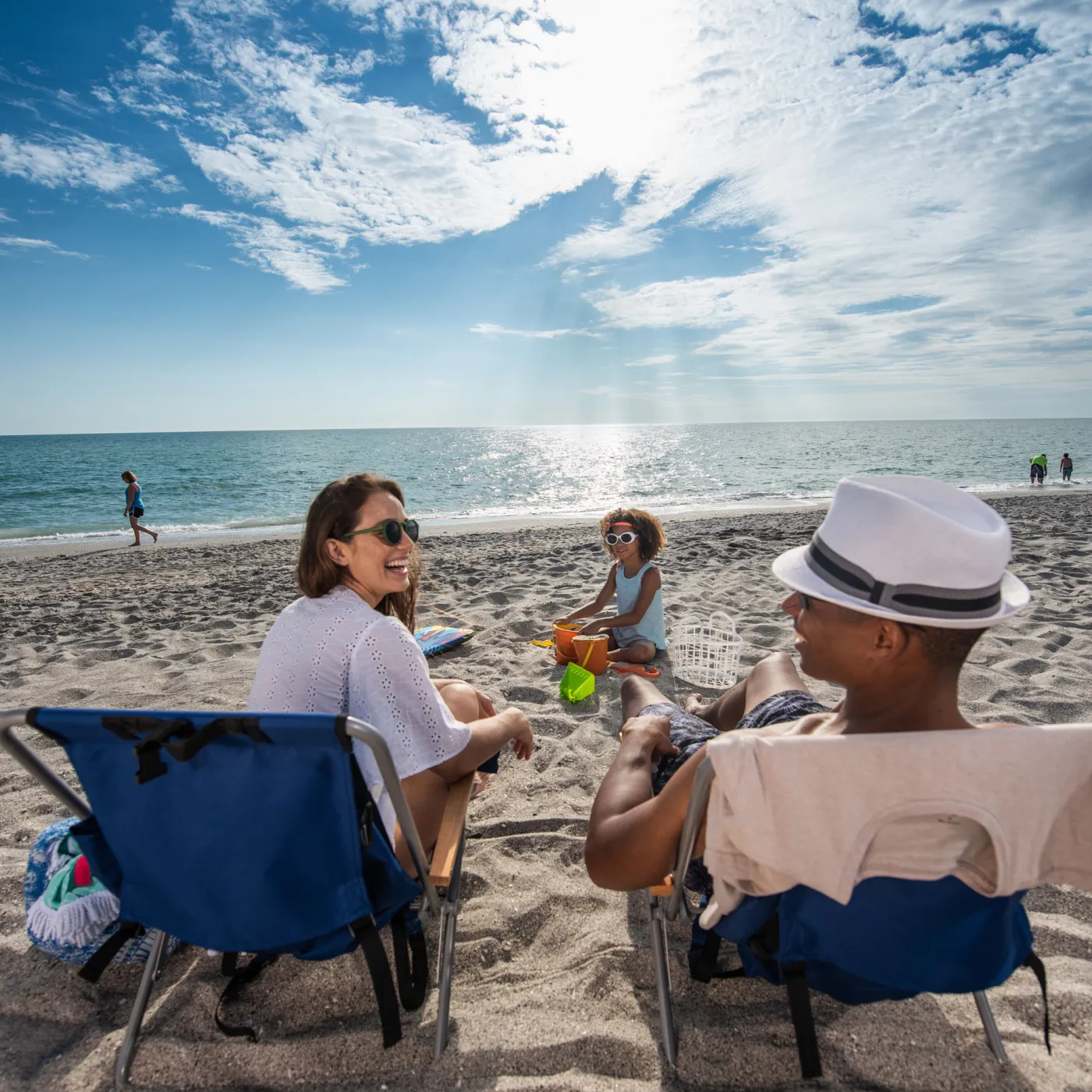
![Boat parking at The Crow’s Nest in Venice [Photo: Lauren Jackson]](/sites/default/files/styles/popular_stories_teaser/public/2023-import/The-Crow%2527s-Nest-cropped__OPT.jpg.webp?itok=F_GZSs8A)


A Sheller's Field Guide to Sarasota's Shoreline
Where to find seashells, what to look for and tips for your next beachcombing treasure hunt.
Inhabiting the earth for over 600 million years, shells can be found throughout the world, but Florida, with its warm climates and the gentle rolling waves of the Gulf, is a natural repository for the multi-colored specimens. And with 35 miles of coastline and six barrier islands stretching from Longboat Key to Manasota Key, the Sarasota area offers some of Florida's best shelling opportunities.
Strolling along the water's edge, avid beachcombers are drawn to the glistening seashells washed ashore from incoming waves at every foot step. It's a chance for us to slow down, scan the shoreline and uncover nature's hidden treasures as we stoop over to discover colored specimens in varying shapes and sizes.
Whether you're a seasoned collector hoping to find something rare, a jewelry-maker hoping to find that perfect shell for a piece, or a family simply looking for a fun beach activity, consider this your field guide to Florida's Gulf Coast shoreline.
Common Shells Found in Sarasota
 Shell identification and photo courtesy of Robin Draper, Authentic Florida
Seashells are the external skeletons of mollusks, animals that have delicate, soft bodies. As mollusks grow, they create shells that protect their fragile bodies. The nutrients that they take in secrete calcium carbonate that hardens on their outside. When a mollusk dies it leaves behind the shell.
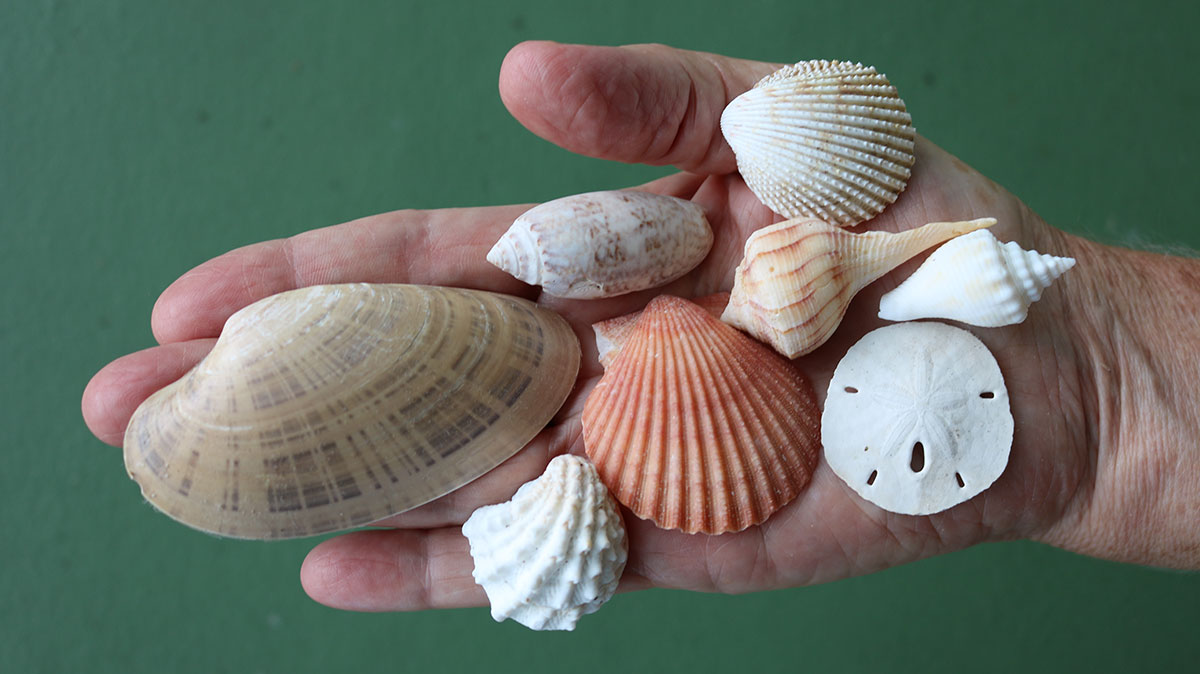
Common shell discoveries found along Florida's Gulf Coast include:
- Alphabet Cone
- Lightening Whelk
- Olive
- Sunray Venus
- Moon Snail
- Scallops
- Cat Paw
- Coquina
- Fighting Conch
- Auger
- Cockle
- Turkey Wing
- Jewelbox
- Sand Dollar: Considered one of the most prized treasures to the Gulf Coast. Early morning beach walks often yield them washed ashore with the tide.
- Shark Teeth bonus: Along Venice and Manasota Key beaches, fossilized shark teeth are just as exciting as shells. Black teeth are the oldest, while lighter-colored finds tend to be younger.
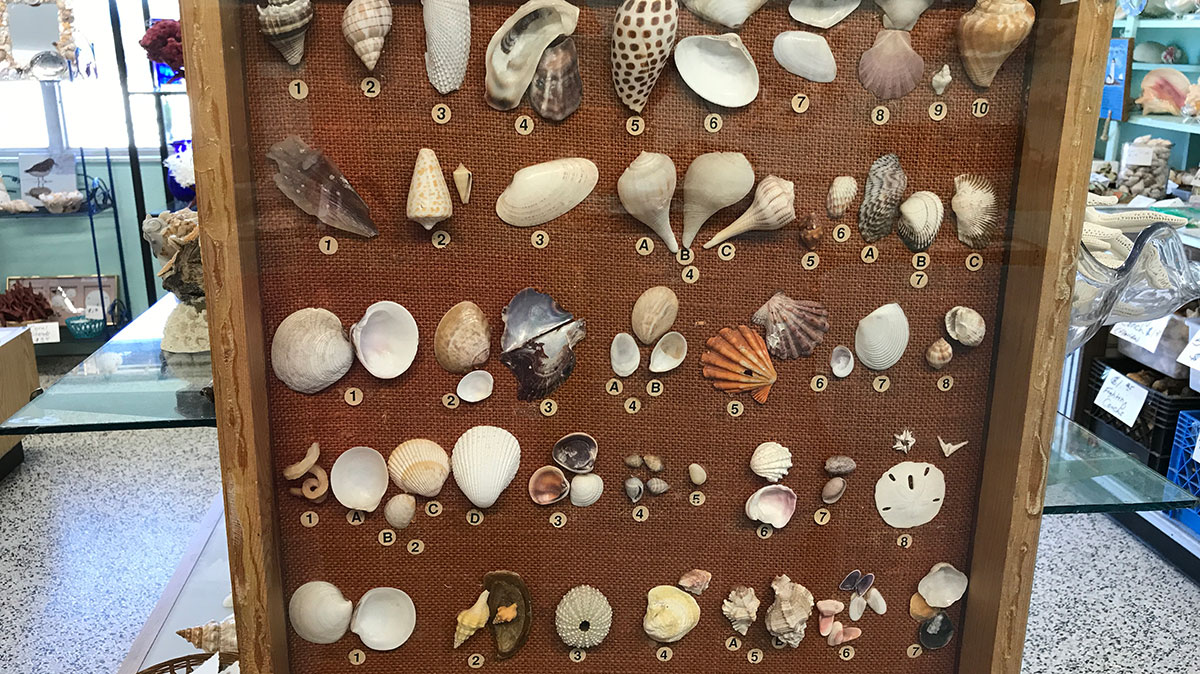 Photo courtesy of Robin Draper, Authentic Florida
To help you further identify your Florida shells, purchase a shelling guide that will provide more insight to your newly found keepsakes. Coastal gift shops often carry these guidebooks, in addition to shell jewelry, artwork and other island-inspired souvenirs. Check the local shops of Siesta Village and St. Armands Circle to start.
Tips for Shelling
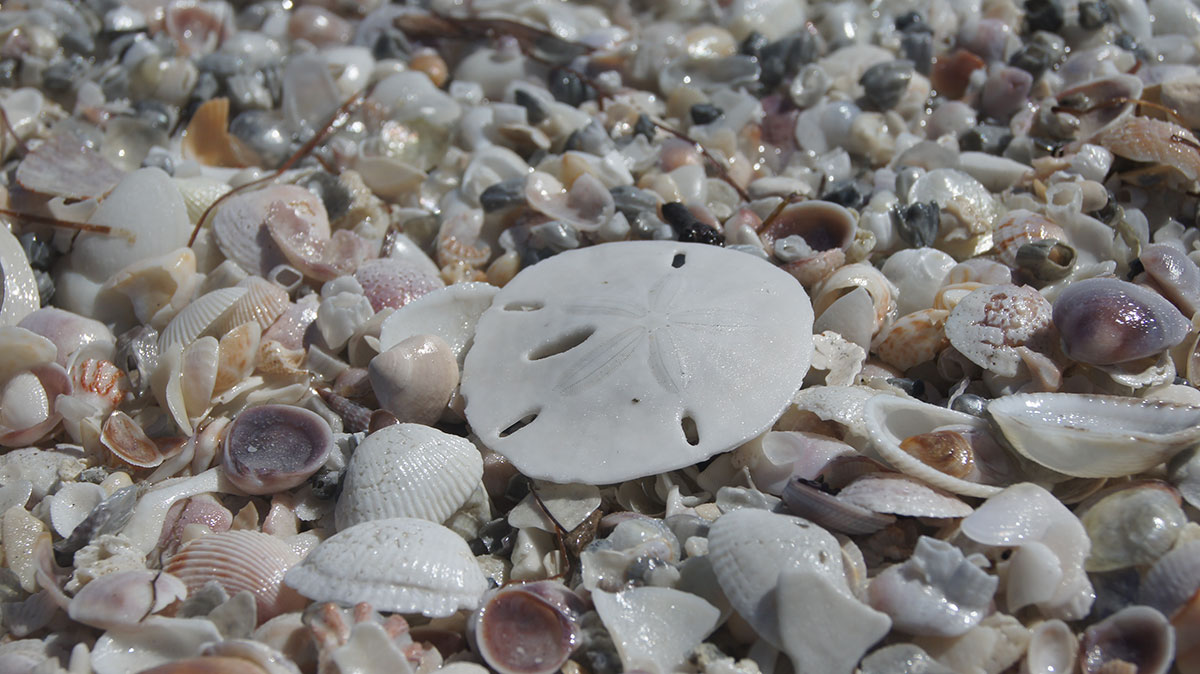 Shelling tips and photo courtesy of Robin Draper, Authentic Florida
- When shelling, follow the shell line and the high-tide mark, where the highest waves stop as they wash onto the sand.
- We've all heard that the “early bird gets the worm,” and the same goes for shelling. Shells wash ashore overnight leaving fresh deposits for the morning beachcombers. Walk as far as you can beyond the crowds where there are fewer people. You're more likely to find coveted ones that have not been picked over.
- Follow the tides. Generally, the best time to shell is an hour before and after low tide.
- Storms usually bring in a bounty of shells, leaving heaps of shells and marine goodies including coral, marine animal casings and sea fans.
- Bring a mesh bag or bucket to collect treasures. A small shovel or shell scoop, too, can come in handy.
- Consider getting in the water with snorkel and fins, skimming the shallows and sandbars where the shells accumulate and have yet to wash ashore.
- Remember the golden rule of shelling: Never take a shell that has a living creature inside. To tell if a sand dollar is alive, look for tiny, hair-like spines on its body. If the spines are moving or feel fuzzy and velvety, it is alive. Live sand dollars are also darker in color (brown or purple), whereas dead ones are bleached white and smooth.
- Wash your haul with fresh water or let them soak over night. They shouldn't have an odor unless there is an animal inside, and in that case, should be not be removed from the beach.
"Secret" Spots to Shell in Sarasota
Like any good treasure hunt, some of the best finds require a little extra effort.
Tidal Deposits
The Sarasota coastline features dynamic barrier islands separated by tidal passes like Big Sarasota Pass. These waterways haul in new shells daily with each incoming tide, depositing fresh new ones along the inlet shore. The easiest way to get to these local inlets and passes is renting a boat for the day.
Sandbars
Having a boat will also make it easier to find hidden sandbars or tidal islands. Shells are often found on these outlying areas that are rich with deposits, especially sand dollars. Sand Dollar Island located on Big Pass between Siesta and Lido Keys deposits new sea treasures each evening.
Shelling on Sarasota's Barrier Islands
Where do you go for easy beach access and prime shelling? Here are the best spots on each Sarasota key:
Siesta Key
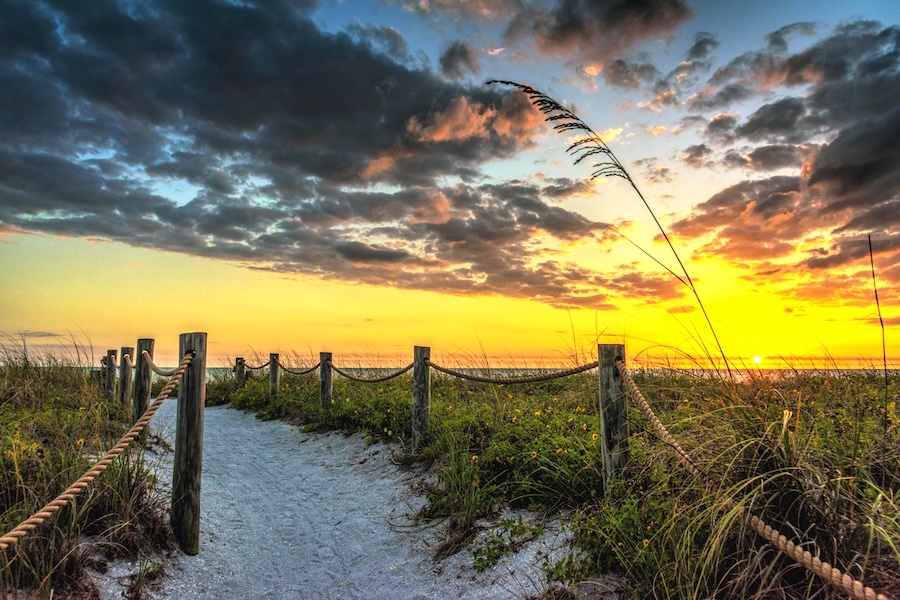
Just south of Siesta Key's Crescent Beach is Point of Rocks. While best known for snorkeling, the rocky outcroppings and tidal pools provide large deposits of shells that accumulate on the beach and between the rocks—revealing loads of colorful fragments and marine curiosities.
Also on the key is Turtle Beach, offering coarser sand that creates better shelling conditions, and often yields larger finds than the white-quartz sands of neighboring Siesta Beach.
Longboat Key
Longboat Key's north end is the place to go. Try Whitney Beach or Longboat Key's farthest beach access (100 Broadway) for shelling. But the real bonus is the most northern tip of Longboat Key, with its beautiful array of driftwood that beachcombers decorate with hanging seashells and other findings.
Lido Key
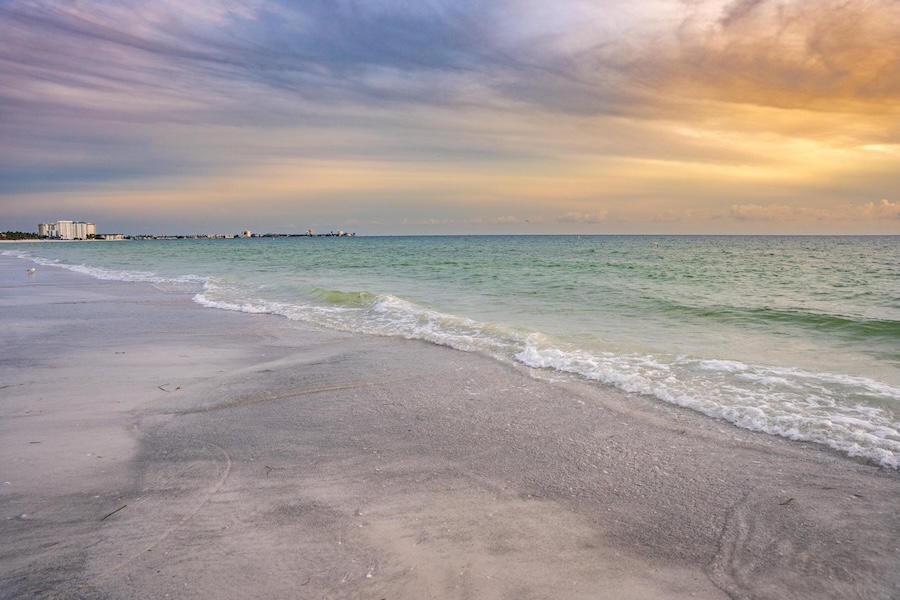
Lido Key is divided into North Lido Beach Park, Lido Key Public Beach and South Lido Beach. North Lido Beach tends to have more shell variety because there are fewer crowds and it is less picked over. But large mounds of shells known to pile up along the water's edge of South Lido can also be found.
Casey Key
Nokomis Beach on Casey Key is loaded with shells—making it one of the best shelling locations in Sarasota—especially all the sand accumulated by the North Jetty. This is where the Venice Inlet meets the Gulf, so the currents often deposit an assortment of shells after strong tides and storms. Arrive early in the morning or visit after a cold front for your best chance at uncovering prized species.
Venice Island & Manasota Key

This area is known as "The Shark Tooth Capital of the World", so naturally sought after more for its tiny black sharks' teeth than its seashells. If you have not tried this, it's a must while in the Sarasota area. Head to any of the Venice Beach and Manasota Beach access points and the treasures await you.
Tucked between Manasota Key and Little Gasparilla Island, the lesser-known spot of Blind Pass Beach Park is a favorite among shelling enthusiasts thanks to its secluded shoreline and abundance of shell deposits.
Britt Mattie
Britt loves to shine a light on all things 'local' – whether it's places to eat, drink, stay or explore—especially in her home base of Sarasota, FL.
